
I have run updates to my model for lower and medium vaccine efficacy to Omicron, and lower, medium and higher virulence and mortality, and continue to compare with reported data. While evidence is still in short supply, nothing has firmly contradicted the impression that Omicron is highly transmissive, as well as being possibly less virulent.
Tag Archives: Coronavirus
The Coronavirus pandemic situation in Europe
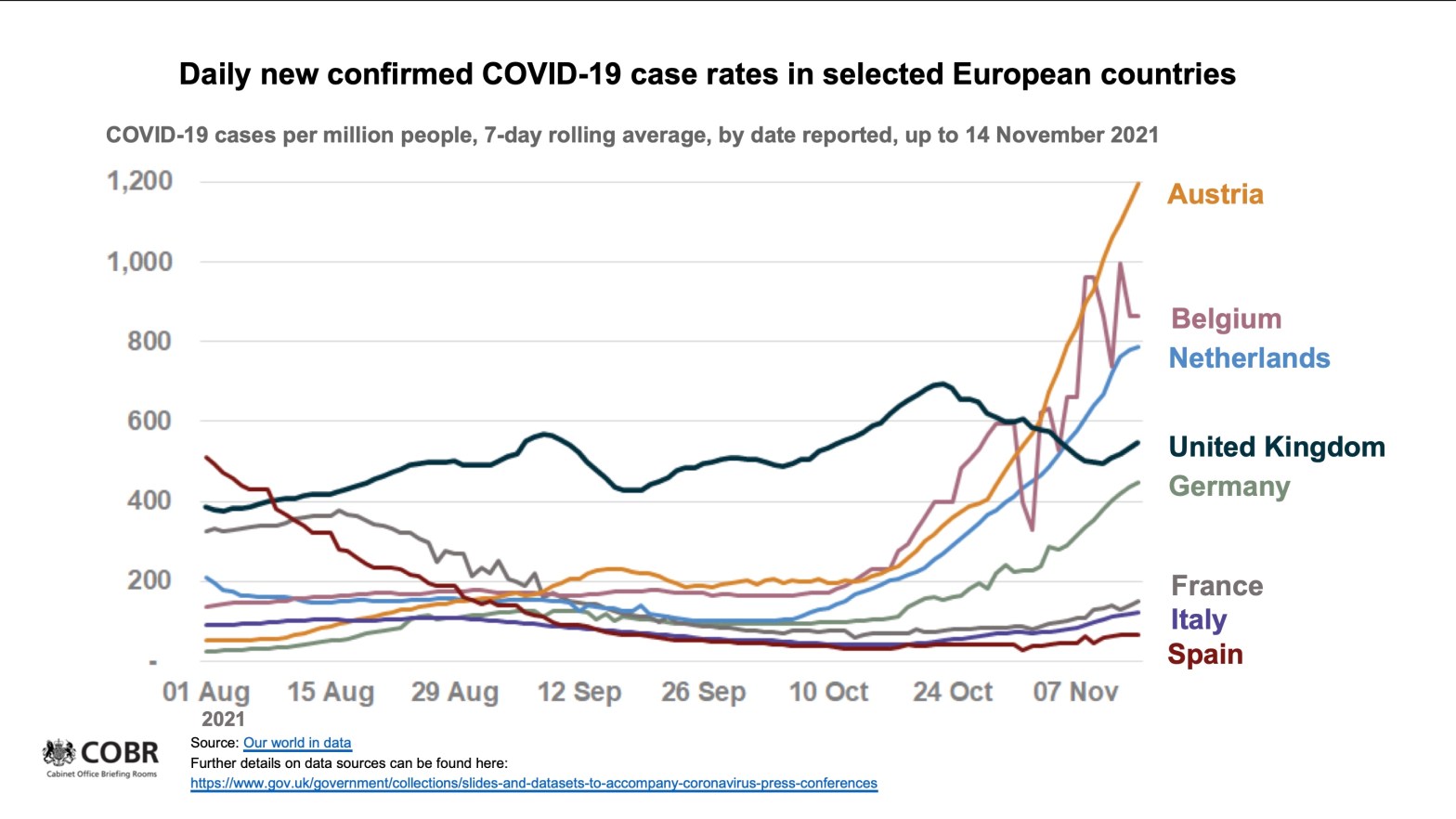
The pandemic situation in continental Europe has been worsening rapidly, and I felt that it I should update some country comparisons in a dedicated post.It confirms that the sourcing of data for a Coronavirus model of any given country is a very specific task nowadays, given the considerable differences in the underlying demographics, cultures, Government actions (NPIs) and public responses in the various countries.
This blog post isn’t looking at the modelling per se, but concentrates on the very different outcomes we are seeing across Europe, and looking at some of the reasons why.
Coronavirus pandemic modelling review

Vaccination has somewhat stabilised the SARS-Cov-2 pandemic in the UK. I summarise the capabilities that I have found necessary and useful in modelling the behaviour of the pandemic; successive variants, different population age-groups, the effect of Government NPIs, and vaccinations.
Coronavirus booster jab matters
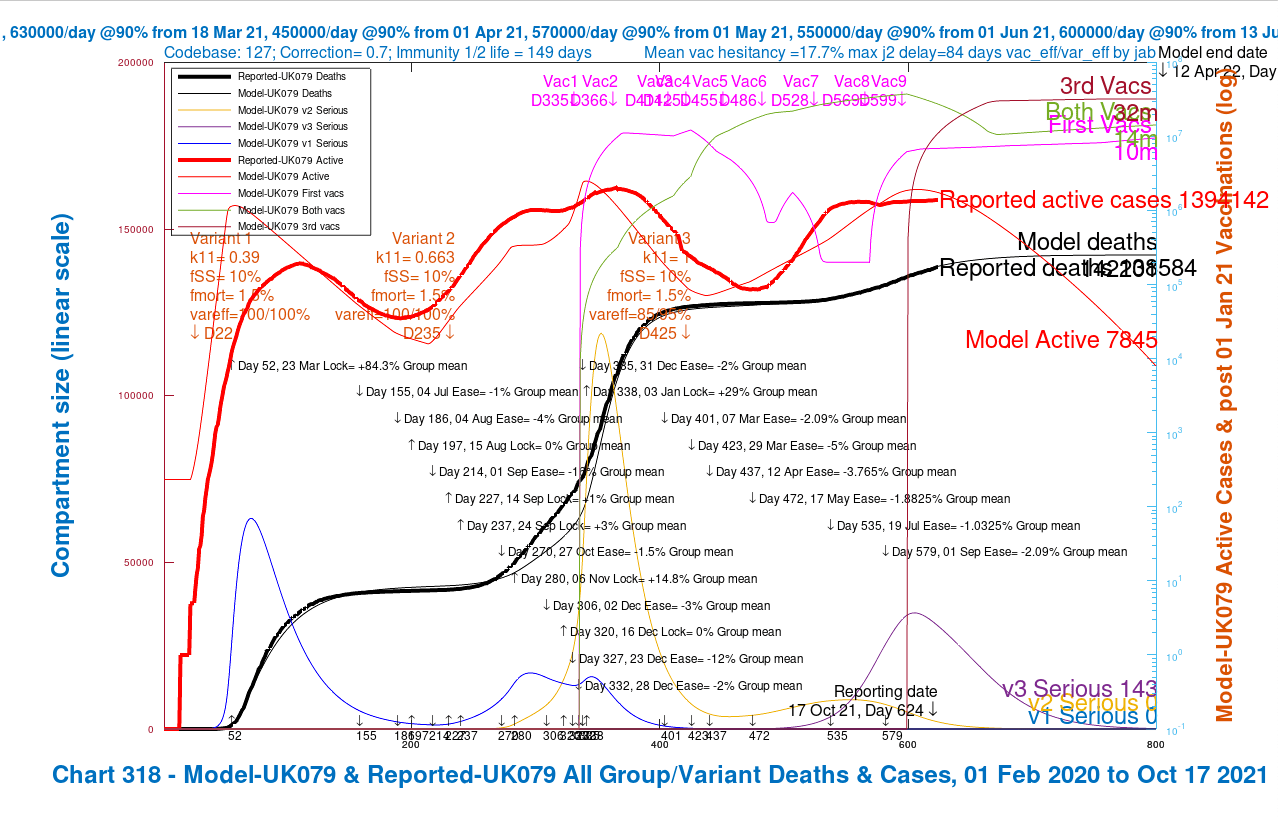
Having just had my 3rd Covid jab, the “booster” jab, it provoked a few thoughts about that, my Coronavirus model, and the wider scene. I had incorporated multiple jabs into my UK model some time ago, and multiple phases for inoculation volumes to cope with the first and second jabs. I am taking this opportunity to report briefly on model outcomes for waning immunity in the context of booster jabs.
The UK Select Committees’ report into UK Government Coronavirus Covid failures

The UK parliamentary Health and Social Care, and Science and Technology Committees have just jointly published their substantial report criticising the many errors made by UK Government in its handling of the Covid crisis. It praised, justifiably, the excellent strategy (early risk investment) and deployment of vaccines. But its own timing is as questionable as that of any it seeks to criticise.
Implications of the R0 Reproduction Number in an unconstrained Coronavirus Delta variant environment
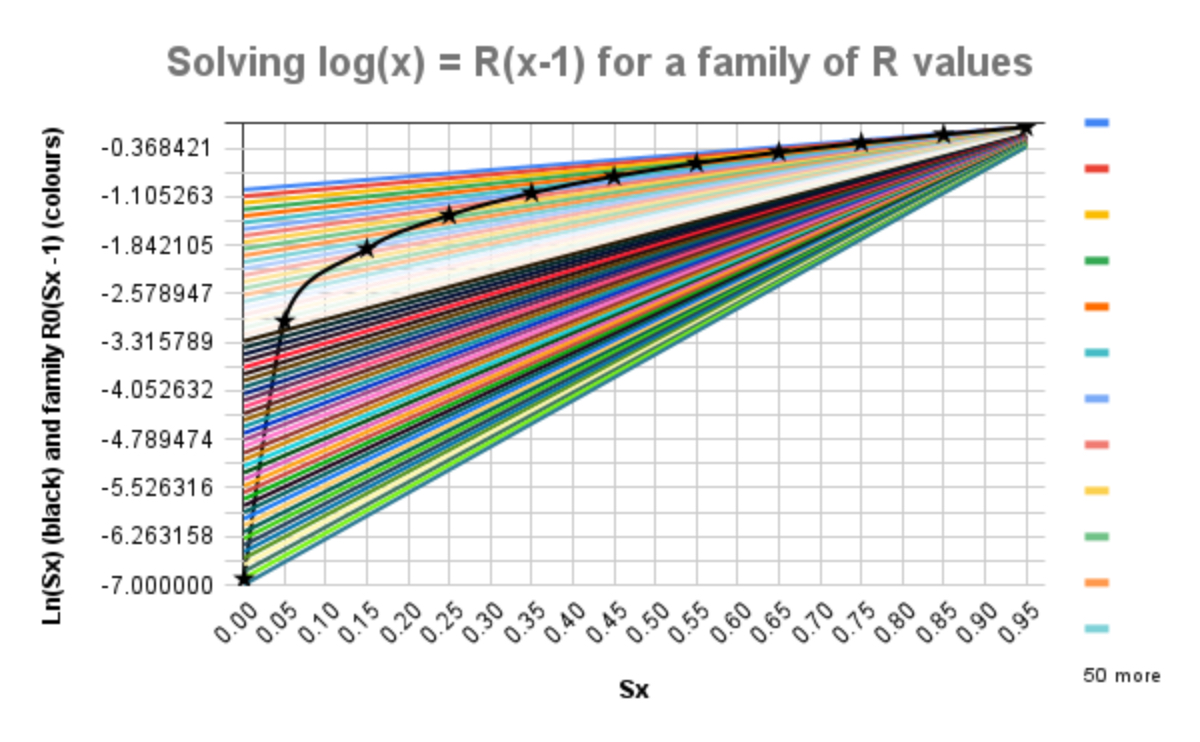
In my April 8th 2020 post about the R0 reproduction number and the use of SIR models to model the pandemic, I developed a chart which predicted the proportion of the population uninfected by the end of an unconstrained pandemic.
That chart allowed for an R0 up to 3, but the Delta variant that arrived in the UK a year later, in April 2021, has an R0 far higher than the original, possible 2.5 times as high, as much as R0=7, perhaps.
I have added to the scope of that previous post to develop a chart allowing R0 up to 7..
Protected: Notes for Twitter group – Coronavirus and Gompertz
There is no excerpt because this is a protected post.
“Freedom Day”, multiple vaccinations and the Coronavirus Delta variant
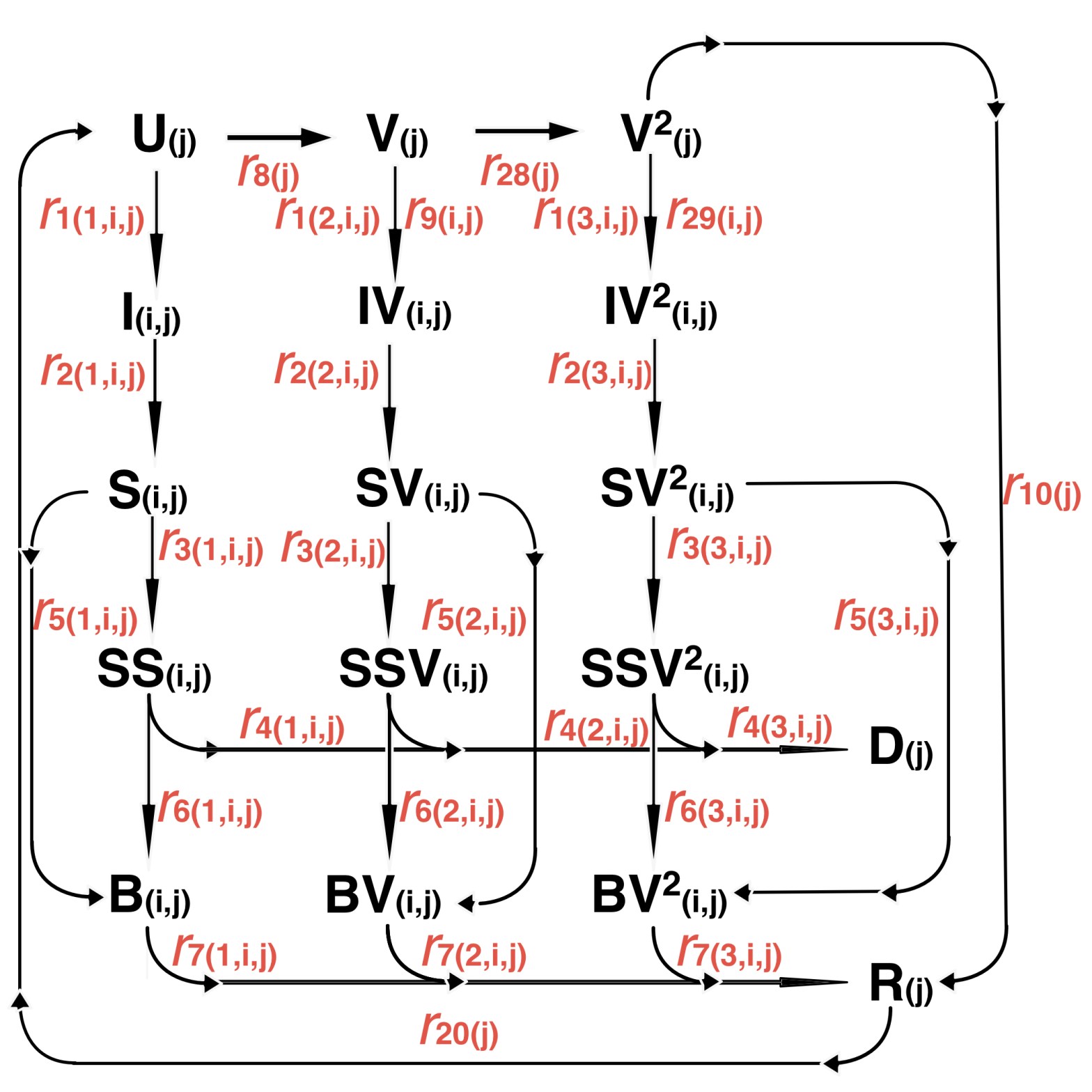
In this post, I run a development of my model which includes immunity waning (at a 150 day half-life), vaccine hesitancy by group, multiple vaccine inoculations (representing the typical two jabs required by most vaccines for best immunity) and also the possibility of vaccinated people not only to become infected, but also to pass on the virus even if not infected themselves.
Coronavirus Delta variant impact on June 21st easing – delay or reduce?
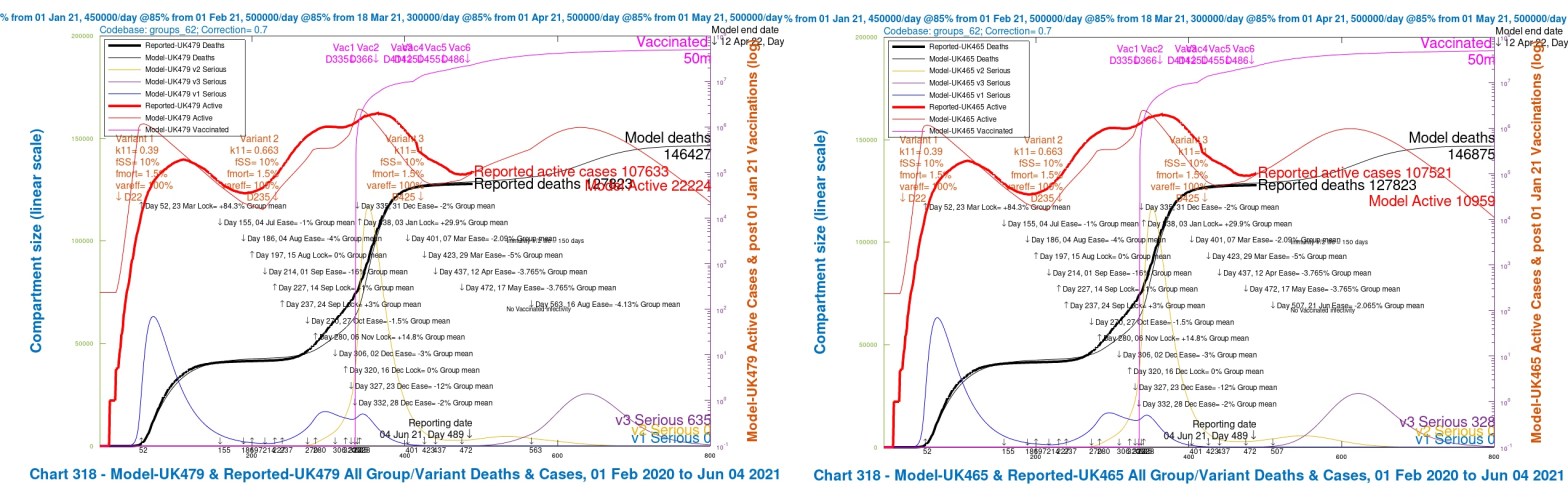
Having explored what pandemic advisers might be seeing and highlighting to decision-makers in Government, I run scenarios with different settings for the planned June 21st relaxation of lockdown, the last in the series of relaxations over the first half of 2021, following the January 3rd lockdown. These model scenarios show examples of what the relative consequences of the June 21st relaxation as planned, versus four other options:- cancellation of the June 21st step altogether, two different delays, of 28 and 56 days, and lastly a 50% reduction in the scope of the June 21st relaxation.
Tuning the age and vulnerability Coronavirus model

In my latest post on March 26th I described a new Coronavirus group model, based on work I had done as a UK case study in support of Prof. Alex de Visscher’s paper, in conjunction with Dr. Tom Sutton, on “Second-wave Dynamics of COVID-19: Impact of Behavioral Changes, Immunity Loss, New Strains, and Vaccination” which has now been published for peer review as a pre-print on Springer’s site at https://www.researchsquare.com/article/rs-195879/v1. I have now added the latest UK vaccination progress figures, and the UK Government’s announced intentions for the near future regarding Non Pharmaceutical Interventions (NPIs). I have also updated mortality and infection characteristics for the four different population groups in the model.
 A rambling mind