Phenomenology & Coronavirus – modelling and curve-fitting

There is a range of modelling methods, successively requiring more detailed data, from phenomenological (statistical and curve-fitting) methods, to those which seek increasingly to represent the mechanisms (hence “mechanistic” modelling) by which the virus might spread.

We see the difference between curve-fitting and the successively more complex models that build a model from assumed underlying interactions, and causations of infection spread, between parts of the population.
Some thoughts on the current UK Coronavirus position

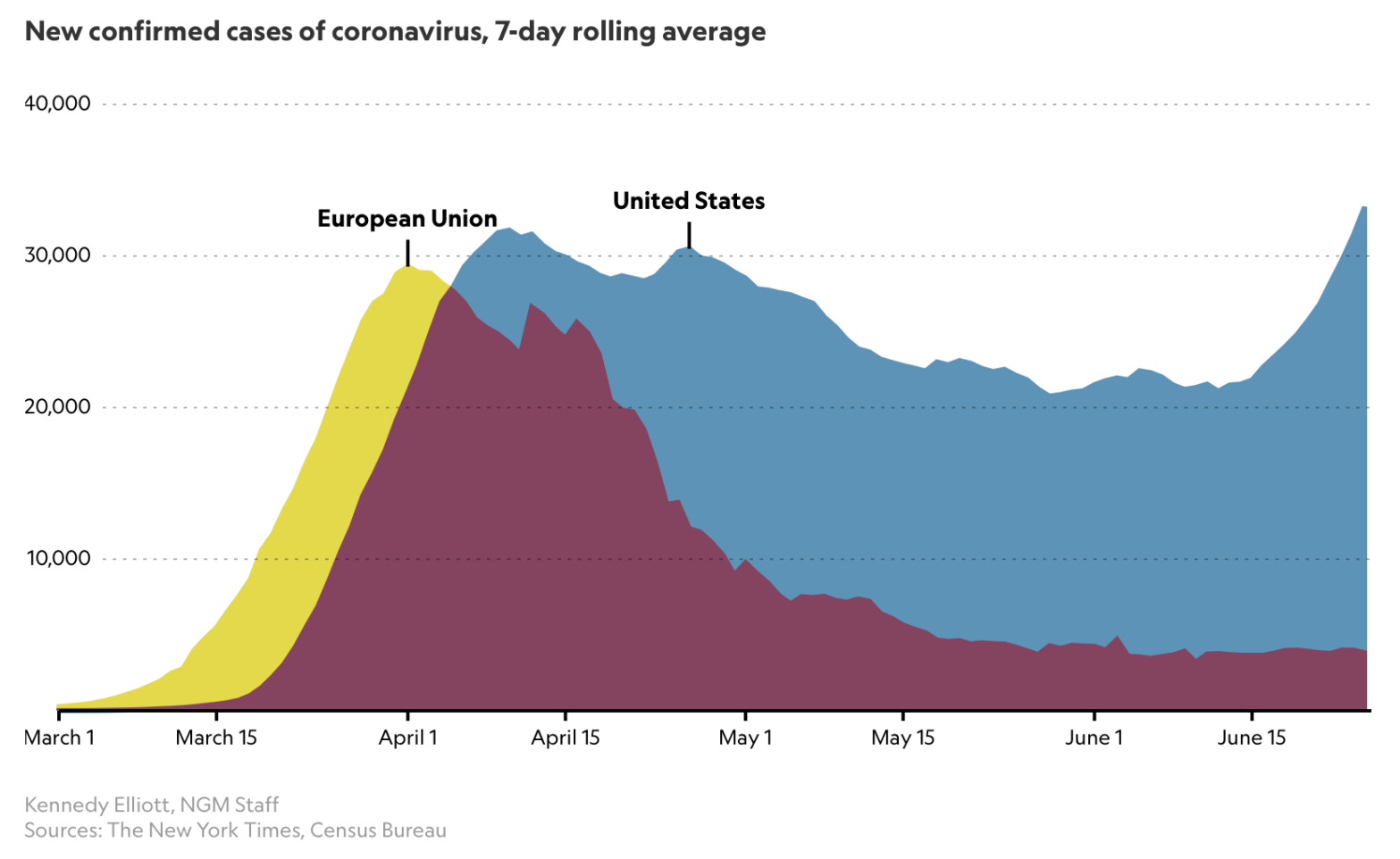
A couple of interesting articles on the Coronavirus pandemic came to my attention this week; a recent on in National Geographic on June 26, highlighting a starting comparison of the USA’s cases history and recent spike in case numbers with European data.

This article referred to an older National Geographic piece, from March, by Cathleen O’Grady, referencing a specific chart from Katy Armstrong of the Imperial College Covid-19 Response team.

I noticed, and was interested in that reference following a recent interaction I had with that team, regarding their influential March 16th paper.

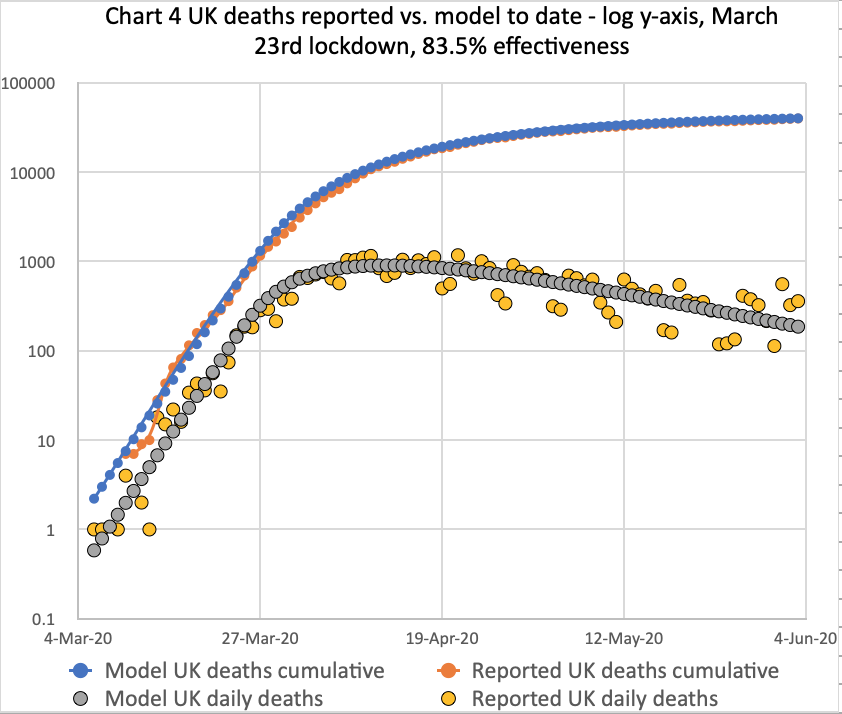
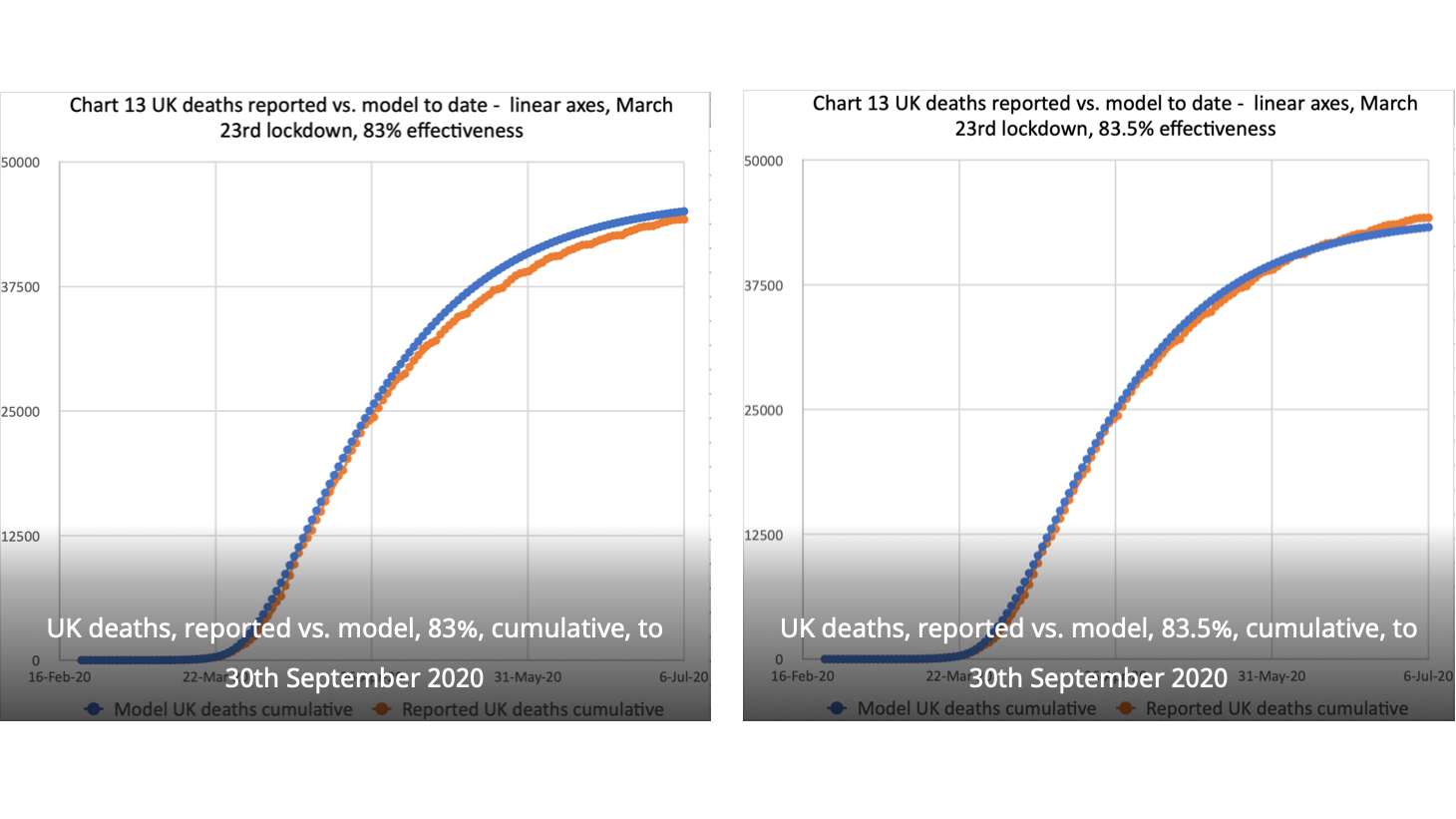
Meanwhile, my own forecasting model is still tracking published data quite well, although over the last couple of weeks I don’t think the published rate of deaths is falling as quickly as before.

Coronavirus model tracking, lockdown and lessons

A brief update post to confirm that my Coronavirus model is still tracking the daily reported UK data well, and doesn’t currently need any parameter changes. I go on to highlight some important aspects of emphasis in the Daily Downing St. Update on June 10th, as well as the response to Prof. Neil Ferguson’s comments to the Parliamentary Select Committee for Science and Technology about the impact of an earlier lockdown date, a scenario I have modelled and discussed before.

Current Coronavirus model forecast, and next steps

My model is currently fitting deaths data for the UK, on the originally modelled basis of Government published “all settings” deaths. I plan to compare results by looking at the Gompertz function and Sigmoid charts that Michael Levitt uses.

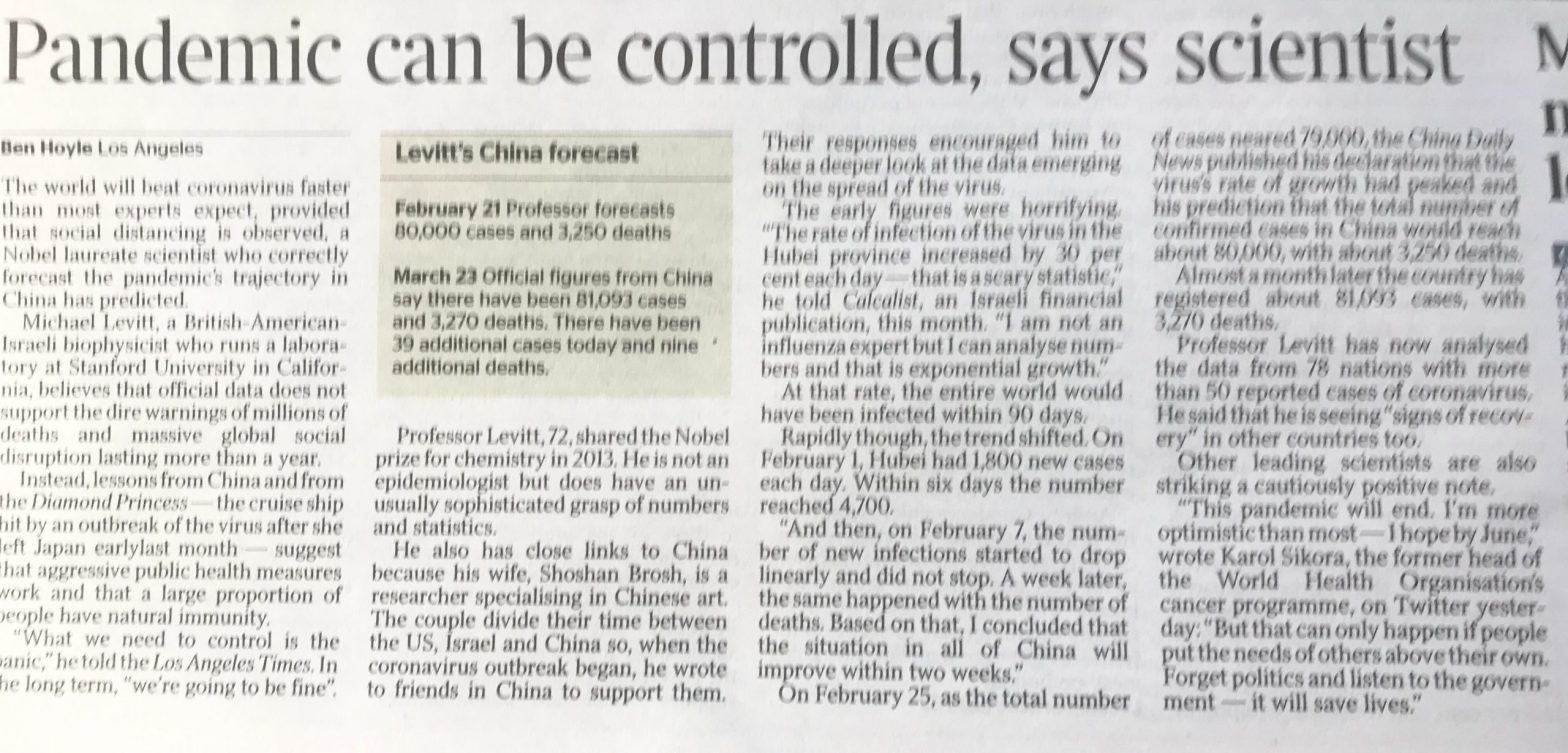
Michael Levitt’s analysis of European Covid-19 data – Coronavirus

I promised in an earlier blog post to present Prof. Michael Levitt’s analysis of Covid-19 data published on the EuroMoMo site for European health data over the last few years. His finding is that COVID19 is similar to flu only in total and in age range excess mortality. Flu is a different virus, has a safe vaccine & is much less a threat to heroic medical professionals.

My model calculations for Coronavirus cases for an earlier UK lockdown

This post presents the two case number comparisons charts for the 9th March and 23rd March lockdown dates (I had covered the death data in more detail in my previous post on this topic).

Cambridge Conversation 14th May 2020, and Michael Levitt’s analysis of Euro Coronavirus data

I covered the May 14th Cambridge Conversation in my blog post last week, and promised to make available the YouTube link for it when uploaded. It is now on the University of Cambridge channel.

Another perspective on Coronavirus – Prof. Michael Levitt

Owing to the serendipity of a contemporary and friend of mine at King’s College London, Andrew Ennis, wishing one of HIS contemporaries in Physics, Michael Levitt, a happy birthday on 9th May, and mentioning me and my Coronavirus modelling attempts in passing, I am benefiting from another perspective on Coronavirus from Michael Levitt.

Cambridge Conversations May 14th 2020 – reading data and the place of modelling – Coronavirus

Cambridge Conversations May 14th 2020, the second Cambridge Conversations webinar on Covid-19, featuring Professor Sir David Spiegelhalter of Churchill College, and Professor Mike Hulme, Professor of Human Geography and Fellow of Pembroke College.